HOT CORROSION MECHANISM OF NiCr - 40 % Cr3C2 HIGH-VELOCITY OXY-FUEL THERMAL SPRAY COATINGS ON STAINLESS STEEL 304
DOI:
https://doi.org/10.59957/jctm.v61.i1.2026.18Keywords:
Coating, HVOF, hot corrosionAbstract
The hot corrosion characterization of High-Velocity Oxy-Fuel (HVOF) thermally sprayed coatings of 60 %
NiCr[37 μm] - 40 % Cr3C2 on stainless steel 304 substrate was analysed by exposure to molten salts Na2SO4 and NaCl of various mole percentages at a temperature of 750oC. The application of finer NiCr feedstock 37 μm has been effective to improve the quality of thermal spray coatings both in physical and mechanical properties. In this study, the NiCr based coatings is evaluated in the hot corrosion test to verify its reliability. XRD and SEM characterizations were applied to analyse compounds resulting from the hot corrosion process, the depth of pitting, oxide thickness, spalling, and decarburization. Results showed that the higher the mole percentage of salt NaCl, the thicker the oxide and the deeper the pitting formed on the coating surface, and that the oxide formed was Cr2O3 and NiO. Furthermore,
decarburization of Cr3C2 was severe and formed due to hot corrosion on the specimens were classified as type II, in the other hand the decarburization was not detected on the surface of the specimen after the hot corrosion test. However, spalling was evident on every specimen.
References
Worldodometer, “Current World Population.” Accessed: Jan. 06, 2025. Online. Available: https://www.worldometers.info/world-population/
U. S. E. I. A. Independent Statistics and Analysis, Electricity. Accessed: Jan. 06, 2025. Available: https://www.eia.gov/
H. Ding, S. Ding, Q. Tan, C. Zhang, Q. Fang, and T. Yang, Improving power ramp rate of a coal-fired power plant by a bypass steam accumulator, Heliyon, 10, 11, 2024, e32412.
A. Harutyunyan, K. Badyda, and M. Wołowicz, Analyzing of different repowering methods on the example of 300 MW existing steam cycle power plant using gatecycleTM software, Energy, 314, 2025, 134228.
M. Baranda, C. Mayo, R. Diaz, R. Rodriguez, and F. J. Pérez, Comparative environmental assessment of coated ferritic steels suited to steam turbines of coal-fired supercritical and ultra-supercritical power plants, J Clean Prod, 443, 2024, 141226.
R. C. Zeng, L. Sun, Y. F. Zheng, H. Z. Cui, and E. H. Han, Corrosion and characterisation of dual phase Mg-Li-Ca alloy in Hank’s solution: The influence of microstructural features, Corros Sci, 79, 2014, 69-82.
S. Medabalimi, A. M. Hebbale, S. Gudala, U. Rokkala, and M. R. Ramesh, Studies on high temperature erosion behavior of HVOF-sprayed (Cr₃C₂-NiCr)Si and WC-Co/NiCrAlY composite coatings, Int J Refract Metals Hard Mater, 127, 2025, 106970.
M. Waldi, H. B. Samudra, A. Maulana, A. Leksana, D. Hadi Prajitno, and H. Tjahaya, Cyclic Oxidation Behavior of HVOF Thermally Sprayed WC Cermet Based on AISI 1045 Steel, Majalah Ilmiah Pengkajian Industri (Journal of Industrial Research and Innovation, 16, 2, 2022, 73-80.
S. Singh, K. Goyal, and R. Bhatia, A review on protection of boiler tube steels with thermal spray coatings from hot corrosion, Mater Today Proc, 56, 2022, 379-383.
S. Septianissa, B. Prawara, E. A. Basuki, E. Martides, and E. Riyanto, Improving the hot corrosion resistance of γ/γ’ in Fe-Ni superalloy coated with Cr3C2-20NiCr and NiCrAlY using HVOF thermal spray coating, Int J Electrochem Sci, 17, 2022, 221231.
J. Lauzuardy, E. A. Basuki, E. Martides, S. Septianissa, B. Prawara, E. Junianto, and E. Riyanto, Microstructure characteristics of Cr3C2-NiCr coatings deposited with the High-Velocity Oxy-Fuel thermal-spray technique. Materials and Technology, 58, 2, 2024, 137-145.
M. Waldi, E. A. Basuki, and B. Prawara, Quality characterization of HVOF thermal spray coating with NiCr matrix composite for protection application of coal fired boiler tubes, IOP Conference Series: Materials Science and Engineering, 432, 2018, 012011.
S. Hong, Y. Wu, J. Wu, Y. Zhang, Y. Zheng, J. Li, and J. Lin. Microstructure and cavitation erosion behavior of HVOF sprayed ceramic-metal composite coatings for application in hydro-turbines. Renew Energy, 164, 2021, 1089-1099.
H. Sun, H. Ding, and T. Liu, Unveiling the effect of vacuum heat treatment on HVOF-sprayed high entropy cantor alloy coatings: Microstructure, diffusion behavior and mechanical property, Journal of Materials Research and Technology, 33, 2024, 9033-9043.
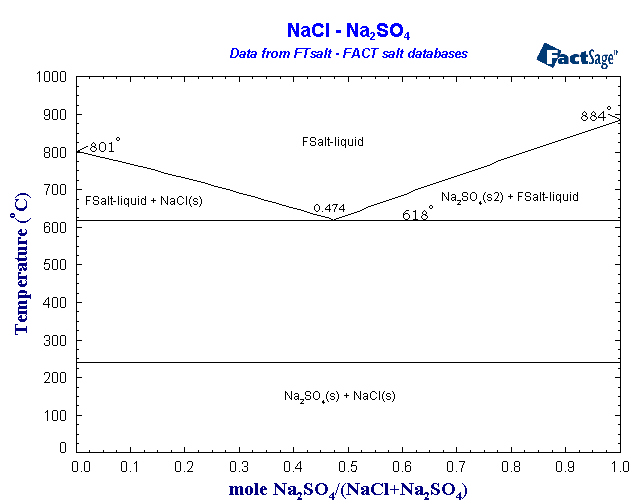
FactSage Software and Database, “Binary phase diagram of NaCl-Na2SO4,” http://www.factsage.cn/fact/documentation/ftsalt/NaCl-Na2SO4.jpg. Accessed: Jan. 06, 2025. Available: http://www.factsage.cn/fact/documentation/ftsalt/NaCl-Na2SO4.jpg
C. C. Tsaur, J. C. Rock, C. J. Wang, and Y. H. Su, The hot corrosion of 310 stainless steel with pre-coated NaCl/Na2SO4 mixtures at 750°C, Mater Chem Phys, 89, 2-3, 2005, 445–453.
N. Hiraide, T. Muneno, and H. Kajimura. Reaction of Cr and Cr oxide with NaCl at elevated temperature, J-STAGE, 58, 10, 2009, 348-355.
M. A. Uusitalo, P. M. J. Vuoristo, and T. A. Mäntylä, High temperature corrosion of coatings and boiler steels in oxidizing chlorine-containing atmosphere Materials Science and Engineering, 346, 1-2, 2003, 168-177.
C. P. Bergmann and J. Vicenzi, Protection against Erosive Wear using Thermal Sprayed Cermet: A Review, Berlin, Springer Berlin Heidelberg, 2011.
A. Ganvir, N. Markocsan, and S. Joshi, Influence of isothermal heat treatment on porosity and crystallite size in axial suspension plasma sprayed thermal barrier coatings for gas turbine applications, Coatings, 7, 1, 2017, 7010004.
F. S. Pettit and G. H. Meier, Oxidation and Hot Corrosion of Superalloys, Superalloys, 85, 1, 1984, 651-687.
E. Epifano and D. Monceau, Ellingham diagram: A new look at an old tool, Corros Sci, 217, 2023, 111113.
M. Roy, K. K. Ray, and G. Sundararajan, Erosion-oxidation interaction in Ni and Ni-20Cr alloy, Metall Mater Trans A Phys Metall Mater Sci, 32, 6, 2001, 1431-1451.
B. Edenhofer, D. Joritz, M. Rink, and K. Voges, Carburizing of steels, in Thermochemical Surface Engineering of Steels: Improving Materials Performance, Woodhead Publishing, 2015, 485-553.
Y. Ding, T. Hussain, and D. G. McCartney, High-temperature oxidation of HVOF thermally sprayed NiCr–Cr3C2 coatings: microstructure and kinetics, J Mater Sci, 50, 20, 2015, 6808-6821.
J. Y. Du, Y. Le Li, F. Y. Li, X. J. Ran, X. Y. Zhang, and X. X. Qi, Research on the high temperature oxidation mechanism of Cr3C2-NiCrCoMo coating for surface remanufacturing, Journal of Materials Research and Technology, 10, 2021, 565-579.
Downloads
Published
Issue
Section
License
Copyright (c) 2026 Journal of Chemical Technology and Metallurgy

This work is licensed under a Creative Commons Attribution-NonCommercial 4.0 International License.